the Movement Monk and Lilian Sjøberg

Prepare to dive deep into Lilian Sjøbergs groundbreaking findings that have the potential to revolutionize how we approach and heal conditions like PTSD, Parkinson’s, trauma, chronic tension, and pain. Get ready for a mind-blowing journey that could change your life.

Enlightening interview with the brilliant researcher and
mind-body connection expert, Lilian Sjøberg

Benny Fergusson from the MovementMonk.xyz​

I had the pleasure of sharing an enlightening interview with the brilliant researcher and mind-body connection expert, Lilian Sjøberg. Prepare to dive deep into her groundbreaking findings that have the potential to revolutionize how we approach and heal conditions like PTSD, Parkinson’s, trauma, chronic tension, and pain. Get ready for a mind-blowing journey that could change your life.

About Lilian and Mind-Body Therapy

Lilian Sjøberg is an expert in mind-body connection therapy, has dedicated her career to exploring the intricate relationship between the mind and body. Through her extensive research and practice, she has discovered that by nurturing this connection, individuals can achieve remarkable healing outcomes. Lilian’s insights have the potential to revolutionize how we approach and treat conditions that have long been considered difficult to address..

Lessons Learned

During our conversation, Lilian shares a treasure trove of lessons that will leave you pondering the true potential of mind-body connection therapy.

Here’s a sneak peek at some of the mind-bending insights you can expect:

  1. Observing Healing in the Present Moment: Discover how cultivating awareness and mindfulness can tap into your body’s innate ability to heal itself.
  2. Bridging the Mind-Body Gap to Heal Chronic Disease:
    Lilian exposes the hidden emotional and psychological factors that
    underpin chronic conditions, revealing the keys to lasting healing and
    well-being.
  3. Links between Stress, PTSD, and Parkinson’s Disease:
    Prepare to have your assumptions shattered as Lilian unveils the
    surprising connections between stress, trauma, and the development of
    Parkinson’s disease. It’s time to rewrite the rules.
  4. Defragging Stress to Regulate the Nervous System:
    Master techniques for defragmenting stress and taking control of your
    nervous system, a crucial step towards unlocking peak performance and
    vitality.
  5. Body Memories and Trauma’s Links to Physical & Mental Disease:
    Brace yourself for a mind-blowing exploration of how trauma can
    manifest as both physical and mental ailments. Lilian shows us how
    mind-body connection therapy holds the key to unlocking profound healing
    potential.

Conclusion

That wraps up this mind-blowing conversation with the remarkable Lilian Sjøberg. We’ve ventured into uncharted territory, redefining our understanding of mind-body connection therapy and its potential to heal conditions that were once deemed untreatable. It’s time to unleash your own healing power and rewrite the rules of what’s possible.

(Below you see a list of content in this hour long video)

Body memmories

4 minutets from the above long video.
What are traumatic body-memories? Can childhood trauma be affecting your body today? And how can we get back into a parasympathetic nervous system state, so the body can heal? In this interview with Lilian Sjøberg we explore her research and findings of improving conditions like PTSD, Parkinsons, Trauma, Chronic tension and pain through mind-body connection therapy.
Fight flight freeze

4 minutets from the above long video.
What happens when the nervous system is stuck and triggered into a state of fight, flight and freeze? And how can we get back into a parasympathetic nervous system state, so the body can heal? In this interview with Lilian Sjøberg we explore her research and findings of improving conditions like PTSD, Parkinsons, Trauma, Chronic tension and pain through mind-body connection therapy.
Time to break the myths -
Ofcause you can become better

17 Lessons On Healing Trauma & Chronic Stress With Mind-body Connection Therapy

In this interview with Lilian Sjøberg we explore her research and findings of improving conditions like PTSD, Parkinsons, Trauma, Chronic tension and pain through mind-body connection therapy. 00:00:00 Introduction to the power of mind-body therapy
00:00:35 About Lilian and mind-body therapy
00:05:02 Lesson 1: Observing healing in the present moment
00:07:08 Lesson 2: Bridging the mind body gap to heal chronic disease
00:10:08 Lesson 3: Links between stress, PTSD and Parkinsons disease
00:13:41 Lesson 4: Defragging stress to regulate the nervous system
00:15:57 Lesson 5: Body memories, trauma links to physical & mental disease
00:20:40 Lesson 6: Intellectualising trauma as a self protective mechanism
00:23:27 Lesson 7: How to start healing trauma and the nervous system
00:27:40 Lesson 8: Working with different types of trauma
00:29:39 Lesson 9: Stress vs stressors: How trauma can form
00:35:41 Lesson 10: What is trauma really?
00:40:00 Lesson 11: The effects of trauma and stress build up on the body
00:42:01 Lesson 12: Triggers, trauma and body memories as a survival mechanism
00:44:20 Lesson 13: How to mindfully navigate self protective mechanisms
00:48:51 Lesson 14: Somatic Therapy: How I healed my body
00:51:58 Lesson 15: The embodiment path to healing the nervous system
00:54:47 Lesson 16: Moving forward in the face of fear
00:58:18 Lesson 17: Self expression & societal conditioning
00:59:40 Outro

Follow Lilian here

Follow my facebook group

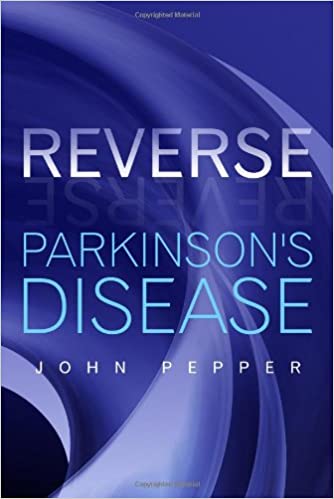
Rethinking Parkinson’s Disease

The book explains how and why trauma, toxins and stealth infections create symptoms diagnosed as a “disease”, usually then treated without any further investigation into prodromal history, early life, toxic load or the possibility of infection.

The book explains how and why trauma, toxins and stealth infections create symptoms diagnosed as a “disease”, usually then treated without any further investigation into prodromal history, early life, toxic load or the possibility of infection.

Tiphanie Gould-Gillespie

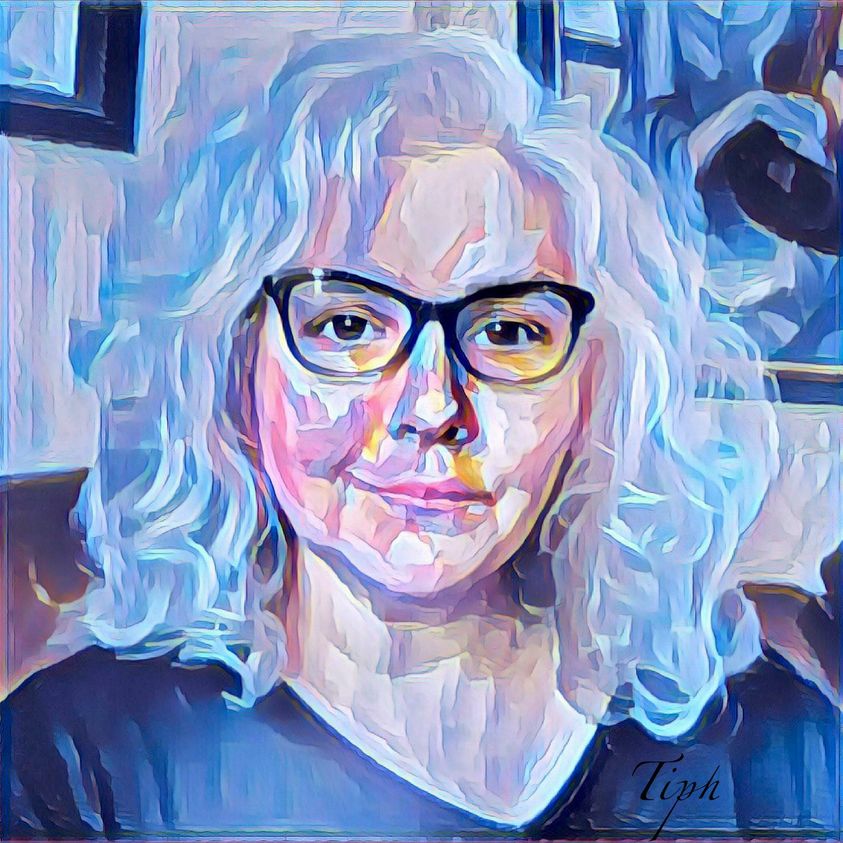
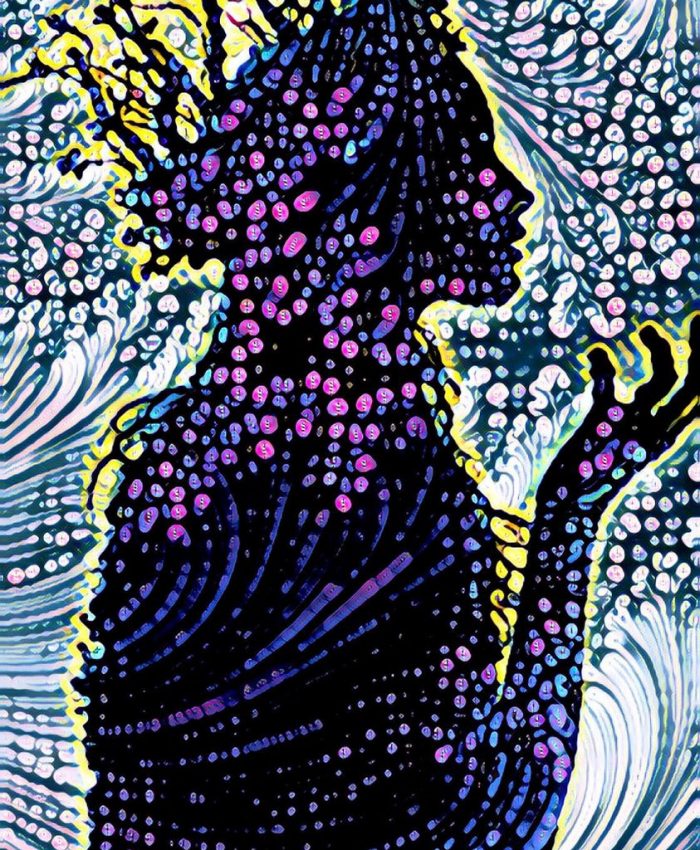
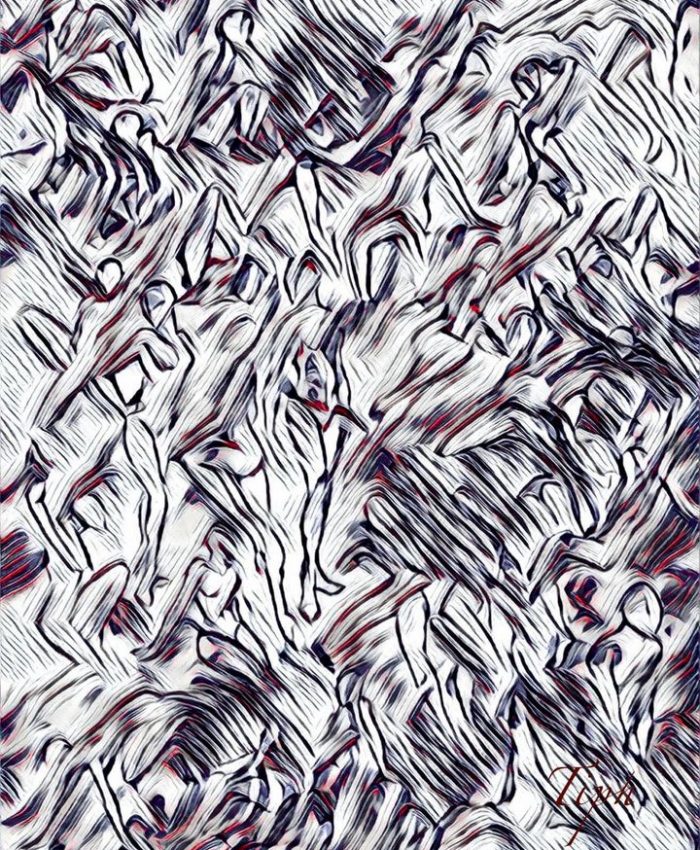
Draw – paint – art. The way to better health. It is possible to become better and reduce your symtoms from most diseases that are stress related as Parkinsons

Artwork as way out of stress and symptoms

Tiphanie Gould-Gillespie is one good example of how Parkinson’s is NOT a devastating disease. She used her diagnosis as a transformation to a better life.

Not only are her symptoms reduced to 20%, but she also chose to come off her prescribed medication, and she instinctively knew that she had to change her lifestyle completely.
She drew a line in the sand on her old life entirely. She challenged her own imperfections and learned to live with them through her artwork.
She had never painted before, but during the last year has seen Tiphanie has seen her art develop to a place where she can start to exhibit her works for other people to admire.
What could your challenge be?
She found that painting was a way of reducing her stress and leading to a more mindful life, whilst her Parkinson’s symptoms reduced considerably.

Hobbywork - Painting
- a way to a symptom free life

My past - stress

My world was perfect. I had a fascinating but full-stress job.
I was a high performing speech therapist
I start to have Parkinson’s when I was in the middle of all this, but I covered up my symptoms.
When my Parkinson’s got worse, I have to step out of my job. I had so many significant side effects that I chose to step out of medication, which was very hard.
I now consume zero medication.

"I have made a challenge to see what happes if I painted full time for one year."

tiphanie gillespie
On pause due to Parkinsons

Reeinventing myself

I need to do something to reinvent myself.

I instinctively knew that I must do something radical.

I transformed from being an extroverted business girl to an introverted artist.

I have never painted before as I have many talented artists in my family. I saw the painting when they struggled in life.
Little did I know that making art gives you a break from stress.

Being 100% dedicated to my art has given me confidence as an artist selling my art.

Being a hermit in my house for the last year has been fantastic for my mind and learning new skills.

I only make 2 social arrangements per week.

No one understands this, but my symptoms have been reduced the big time by this calmer lifestyle.
What a difference a year makes

Thiphanie have started to sell her art on posters and t-shirts

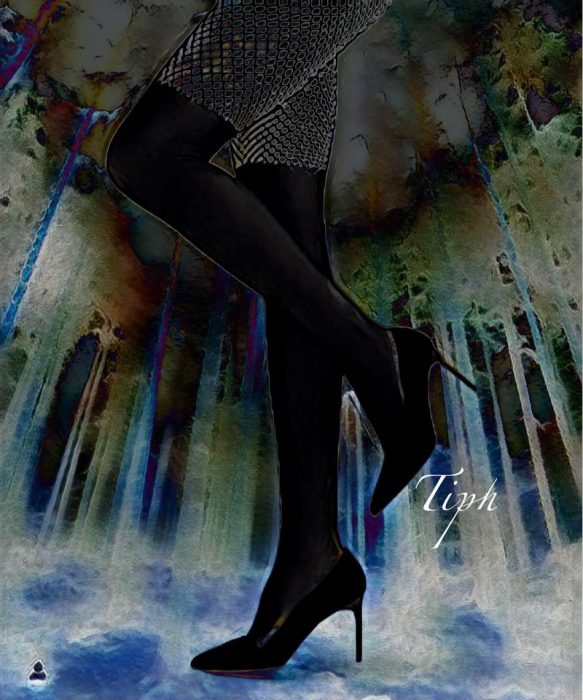
When I could not wear high heels, I could paint high heels

I looked at my old wardrobe with lots of buttons and gorgeous-looking decorations that made the clothes difficult when getting dressed.
I left the fashion style and now wear practical clothes, no makeup, and a simple hairstyle. I needed to let go of so many of my previous habits for dressing. I let go of old standards for how I needed to look. I feel a lot calmer, not needing to be the perfect version anymore.

197571659_10216961227537866_5815724315850806757_n
214908783_10217090526370256_1129605522840988479_n

There is beauty in the broken.

I integrate the tremors in my art. When I have tremors and use the waves as an extra element.

Mental Health and the connection to Parkinsons

Mental Health must be truly understood for what it is.
Mental Health is literally at the core of all things mental, physical, spiritual, and political. Mental health is the core factor of every single choice as we move through the world. Every single interaction is shadowed by the state of our mental health.

Why not integrate your tremor into your hobby, and bend your definition of perfectionism

Nicoles reflections after 1. therapy session

Nicole’s thoughts after the 1st therapy session. How do Parkinson’s symptoms fit in with therapy? Listen to her thoughts

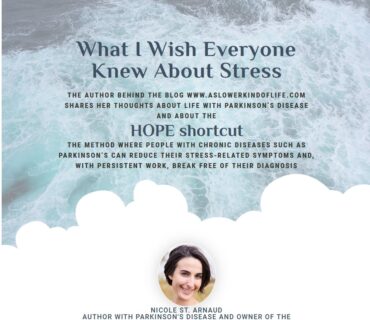
What I Wish Everyone Knew About Stress

The author behind the blog www.aslowerkindoflife.com shares her thoughts about life with Parkinson’s disease and about the
HOPE shortcut
The method where people with chronic diseases such as Parkinson’s can reduce their stress-related symptoms and, with persistent work, break free of their diagnosis

One week after first session with the Hope Shortcut therapy

“Life is bliss, but my brain is trying to convince me otherwise.”

I thought I knew it all about the impact of stress on the body and mind. I’ve studied this topic many times over the many years I’ve been searching for healing. I thought I had it dialed. I know that stress has real physical impacts on the body, that the stress response called Fight Flight or Freeze, can be triggered by the most subtle thoughts, and that society is totally hooked on stress. I know how to counteract stress through relaxation techniques. I know how to create new patterns in the brain.

This is what I wish everyone knew about stress

  1. Your thoughts, beliefs, and perceptions can be a source of stress.
  2. Stress has a real physiological impact on the body.
  3. Most of us are caught in a habitual state of chronic stress.
  4. Chronic stress can create disease states in the body and mind.
  5. A subconscious trigger can initiate the stress response.
  6. Counterbalancing the stress response in the body is essential to good health.
  7. What we do to “relax” may not actually be relaxing.
  8. Techniques like progressive relaxation, meditation, heart coherence, qigong, yoga, tai chi can create the relaxation response in the body and counteract the effects of stress.
  9. Exercise is beneficial because it burns up the excess cortisol and adrenaline in the body created by stress.

I know that my sensitive little nervous system seems to be highly attuned and highly responsive to even the smallest stressful triggers. I am aware of the common sources of unnecessary stress, and I have designed my life not to waste my precious energy on unnecessary stress triggers. I don’t watch the news. I don’t get involved in drama or gossip. I don’t have a packed schedule. I try not to worry about appearances or what other people might think of me. I no longer have a stressful career. I have a peaceful life, so I thought. I also thought I had already done the work to uncover unconscious stress responses. I thought I had mastered my internal critical dialogue. I had healed that aspect of myself that thought I had to do something extraordinary to earn love and acceptance.

I was wrong…

I recently met a Danish biologist named Lilian Sjoberg, who is helping people with Parkinson’s disease and other chronic illnesses reduce their symptoms by becoming aware of their stressful patterns and addressing the root cause. She has recognized that symptoms of Parkinson’s disease look a lot like an extreme Fight Flight or Freeze response.  I find this hypothesis quite accurate, and I started to recognize it in my own body.

Last summer, I was standing in knee-depth wading pool with my friend and our two-year-old sons.  We were looking up at a bird flying by, and I suddenly heard a splash. Her son had slipped and gone under the water. In a quick moment of mommy instinct, she grabbed him and yanked him back up. He came up sputtering, but he was ok. I held my son more tightly. Moments later, my Parkinson’s symptoms hit me with full force. Tremor, muscles freezing, movement slow, brain foggy. I realized that it felt like a full-body panic attack. After this incident, I became more aware of my symptoms related to fearful thoughts. Sometimes I would note an extremely subtle trigger in my thoughts, and sometimes I couldn’t tell what had made a sudden worsening of my symptoms.

I had offered to help Lilian to reach a wider audience with her important message. She asked me to go through her coaching process and write about it. I still thought I already knew what she had to offer from my previous studies on stress. I was wrong. On the healing journey, there is always more to discover.

The first thing Lilian asked me to do was to record my thoughts, emotions, and physical responses throughout a day. I was surprised how stressed out I still am.

Although I am retired from a stressful career, I am now recreating that stress and pressure in my home life. It’s because my brain got so used to stress and pressure that it is literally stuck. The hard-wired pathway in my brain for stress, pressure, and worry is like a superhighway. The one for peace and ease is like a rabbit trail through a dense forest. I am slowly making it more discernible through inconsistent practice.

Lilian’s exercise allowed me to see the direct physical effects on my body as the stress accumulated in the day.

Observe your symptoms

In the process of learning the HOPE shortcut you learn how to keep a diary that helps you to connect symptoms and stress in your life.

Initially the reason is to give you a new belief about the disease

Later it becomes an important tool to reduce your symptoms one by one

This is an excerpt of what I recorded in only one morning (B is my 3 year old son):

9:00 am: B. asks to watch a show.

My thoughts: “But shows are bad for his brain. I shouldn’t let him watch shows. I should engage him in enriching activities. What a failure I am as a mother…”

My body: My stomach tightens.

10:15 am: B. slouched in the car seat and staring out the window blankly.

“OMG. Is there something wrong with him? Does he have the coronavirus? Is he going to die? I feel so helpless. Should I drive straight to the hospital?”

My body: My left hamstring cramps and spasms. My stomach is in knots.

10:20 am: B. says he is hungry

“I forgot the snack in the fridge. OMG. Why can’t I get it together? How do other moms seem to be able to do this, and I can’t. I need help.”

My body: My jaw and facial muscles on the left side tighten.

10:30 am, I do not have B.’s indoor shoes for the babysitting room.

“I forgot B.’s indoor shoes. Oh no. Maybe the babysitter won’t notice. They have to let him in. What if they don’t let him in? Why can’t I get it together?’”

My body: My leg is fully dragging now. My tremor has begun. I am having trouble focusing.

I obviously have a body that is extremely sensitive and at its maximum capacity for handling stress already. Would these symptoms still have come on without my constant barrage of worrisome and self-critical thoughts? I don’t know. I did notice that my thoughts have me in a constant state of self-criticism and stress.

In my first coaching session with Lilian, she recognized that the habitual worrisome thoughts and pressure that I put on myself is a subconscious habit that I picked up in childhood. We work through using different techniques.

Since my session with Lilian on Monday morning, I am feeling a new sense of peace

I had a better day with B. today, putting less pressure on myself and becoming more aware of my stressful thoughts before they get out of hand. I am feeling more confident that I can take a little bit of power back from my roller coaster of unpredictable symptoms by recognizing my internal stressors and using relaxation techniques when they arise.

The research is now very strong that certain specific techniques that counteract the stress response and change the internal state of the body can result in significant health improvements.

I wish everyone understood the impacts of stress on the body: that thoughts can create stress, that the brain becomes habituated to stress and will seek out more, and that there are things you can do about it.

Nicole St. Arnaud
2. march 2020, Alberta Canada

Follow HOPEshortcut here

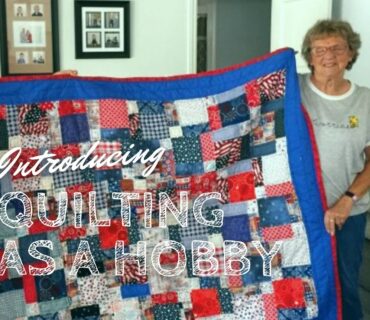
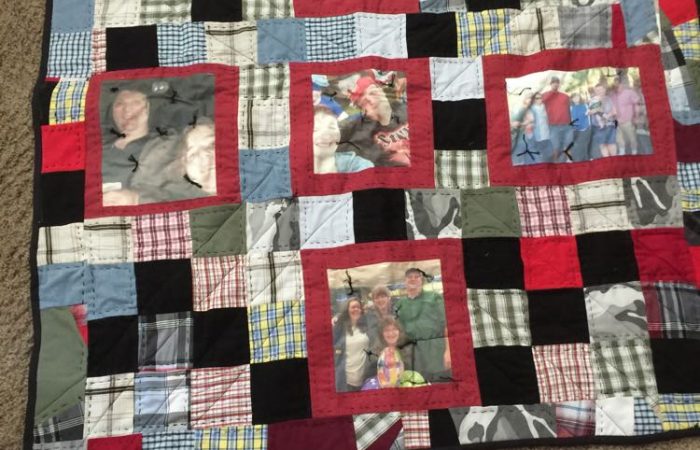
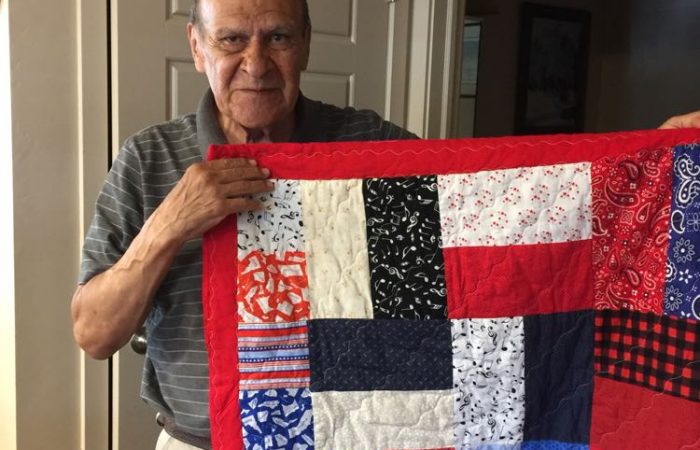
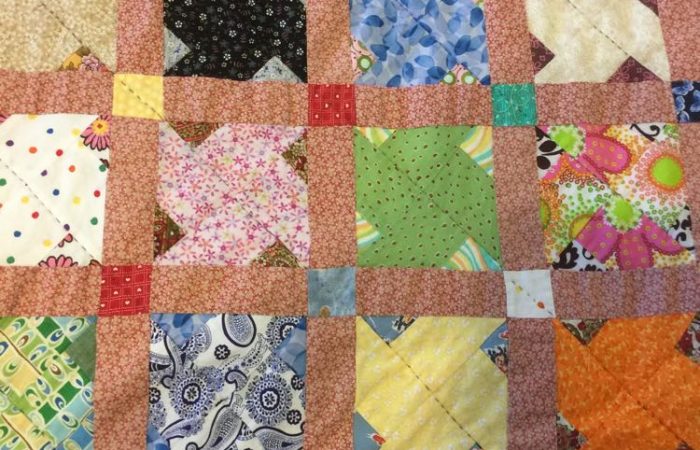
Quilting as a hobby

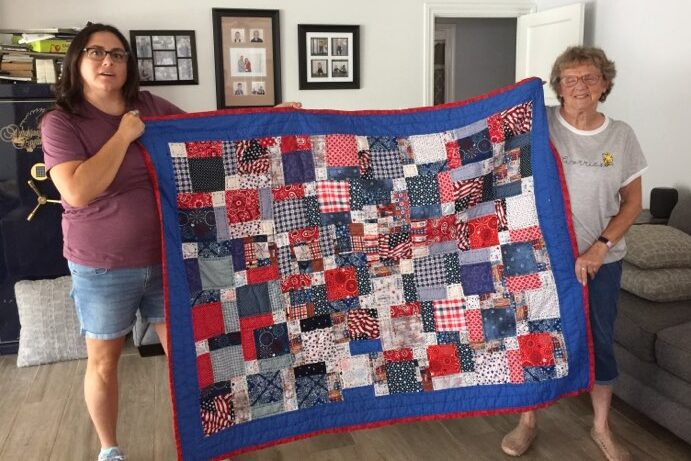
Diane Crowel and her hobby that helps her calm down her anxiety

Who is Dianne Crowel

Hi all

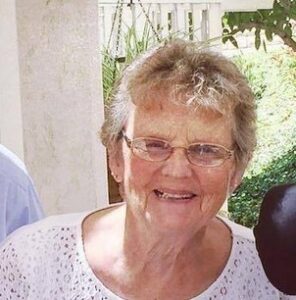
My name is Dianne Crowel (to the right).
I have had Parkinson´s disease for 5 years.

My symptoms are not too bad, so I can do a lot of the things I am used to.
I use Quilting as a relaxing and comforting hobby when my disease gives me anxiety.

Quilting
- a way to a calm life

Purpose

If you are Hopeless, the best thing is to get a purpose that reaches beyond yourself.

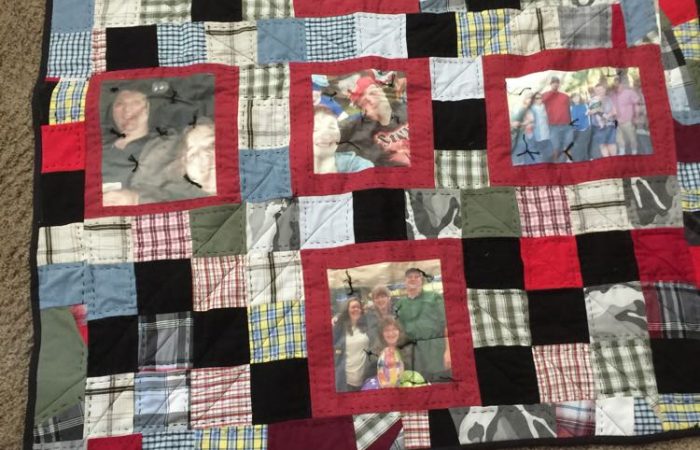
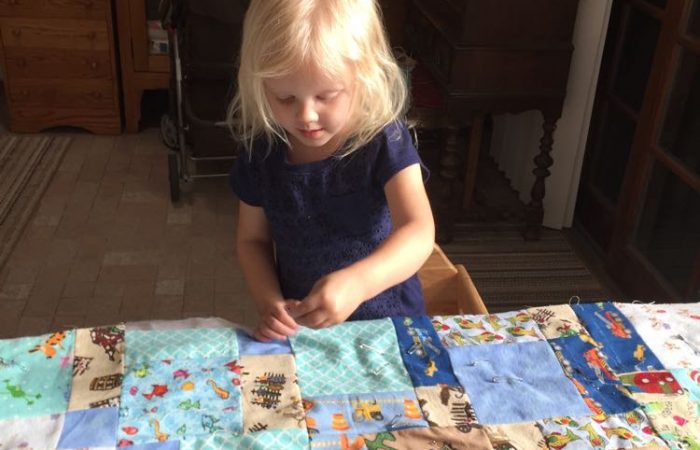
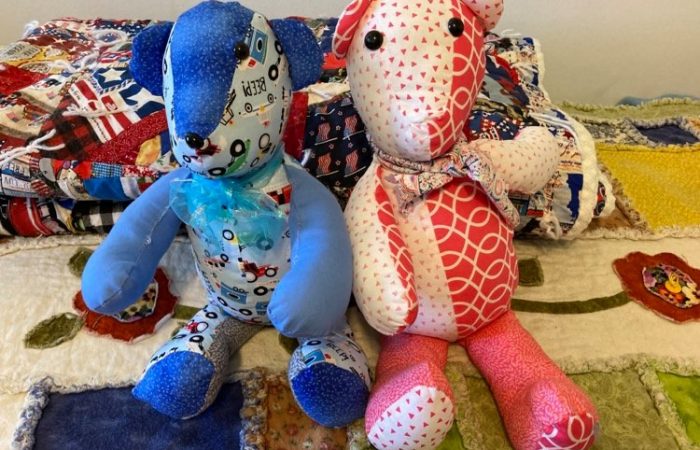
I quilt animals for people that have lost loved ones. I call them memory bears.

This job keeps me busy and makes the people so very happy to have something to hug. 

When I see how I can impact other peoples´ lives It gives me a good feeling as well.

Mindfull

Having a hobby means that you can always comfort yourself and relieve stress.

Your hobby must be so easy that you quickly develop a routine doing it, so you are slowed down in speed. And it is prefferable that it is a bit challenging so your thoughts do not wander anywhere else, to the past or future.
When you get to this sweet spot, it is as good as meditation. It is a form of mindfulness.

When your thoughts stay in the present moment, you will have fewer symptoms.

"I use my hobby to keep down my stress
and anxiety level"

Diane Crowel
Retired with Parkinsons

My work - Quilting

In the video I tell you a very short story about my work, my hug dogs and my quilts.

Feel free to contact me about my memory bears and hug dogs. It feels good to help other people in pain.

Just click on the video to the right and see 2 minutes of introduction to my Quilting world.

I have had Parkinson’s for about five years.

I am very convinced that the disease is stress-related:
I have had two bad marriages. My spouse was drinking and fighting me. It was terrible.

I have six kids, four boys two girls. The third boy has a cleft palate and has had several surgeries. Two have had terrible asthma.

Five of them made it and are all teachers. But one passed away two years ago. I have been having a hard time, but it is getting better.

Also, my symptoms get a little better as the anxiety reduces.

Socialize

I love working with my groups and doing what I can for them. Both online groups and local groups.
I do online cycling and yoga with Jacob. I want to do dance as well.

Sometimes a hobby comes with a social life, where you get the benefits from the joy other people can give you. We are social beings and we therefore thrive in supportive surroundings.


Be in the moment

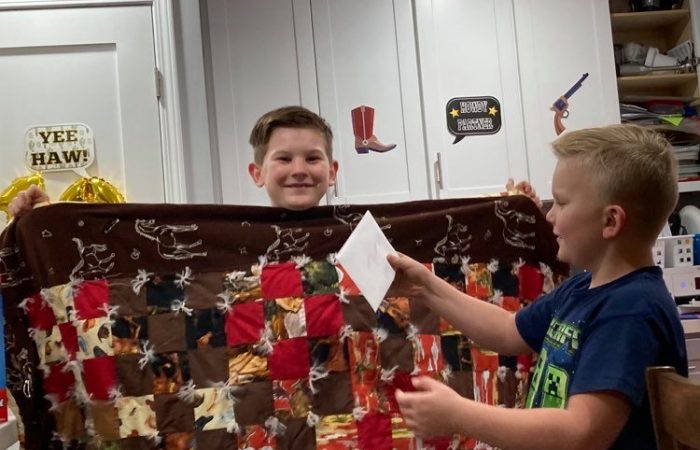
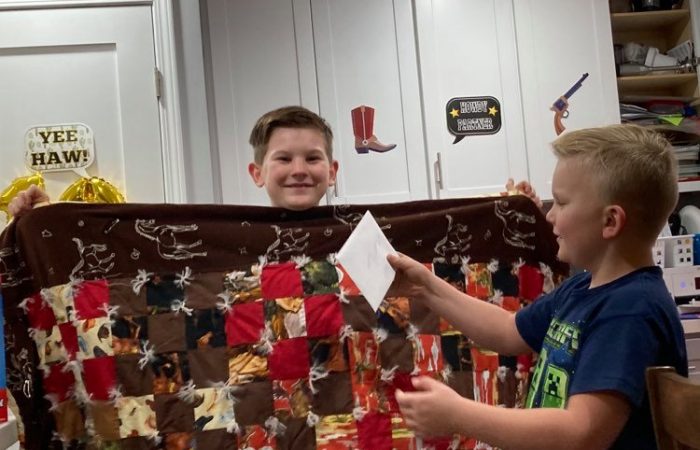
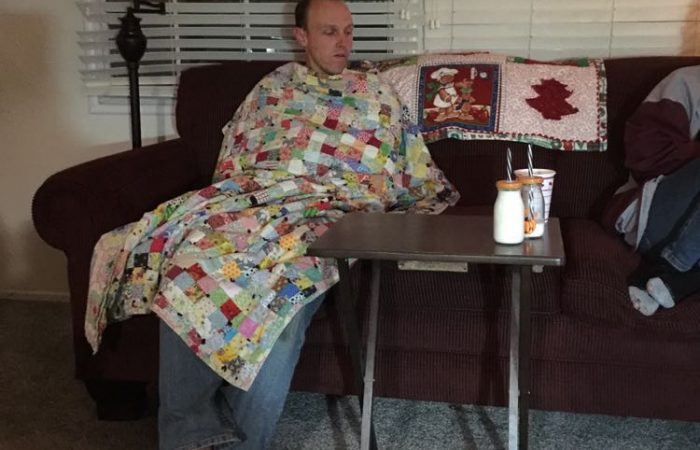
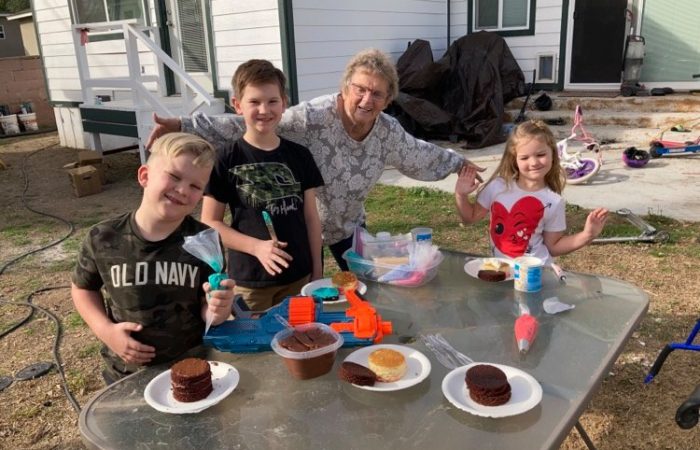
My grandchildren are happy to help me with the quilts and you can see how they like to show the blankets to us.

Being around my grandchildren makes all fear fade away.

Why not slow down in speed

"When I am on vacation I have a lot less symptoms
I’m away from stressful things. Love to go."

Diane Crowel
Retired with Parkinsons

Quilting Questions